
Installeer de app
How to install the app on iOS
Follow along with the video below to see how to install our site as a web app on your home screen.
Opmerking: This feature may not be available in some browsers.
Je gebruikt een verouderde webbrowser. Het kan mogelijk deze of andere websites niet correct weergeven.
Het is raadzaam om je webbrowser te upgraden of een browser zoals Microsoft Edge of Google Chrome te gebruiken.
Het is raadzaam om je webbrowser te upgraden of een browser zoals Microsoft Edge of Google Chrome te gebruiken.
Zin en onzin van cryptovaluta
- Onderwerp starter Herr Sens
- Startdatum


Mike
Spiritoverflesh
Well-known member
Spiritoverflesh
Well-known member

Lievergezond
Well-known member
De crashes zijn goede bijkoopmomenten.
Andere momenten ook omdat de markt voor leken (zoals mijn persoon bijv.) vaak onvoorspelbaar is.
Standaard wordt bitcoin alleen maar meer waard bijv. over vier jaar genomen sinds de start.
| Periode | Beginprijs (USD) | Eindprijs (USD) | Rendement |
|---|---|---|---|
| 2010 → 2014 | ~$0,08 | ~$320 | +400.000%+ |
| 2011 → 2015 | ~$1 | ~$430 | +43.000% |
| 2012 → 2016 | ~$12 | ~$650 | +5.300% |
| 2013 → 2017 | ~$120 | ~$13.000 | +10.700% |
| 2014 → 2018 | ~$320 | ~$3.800 | +1.090% |
| 2015 → 2019 | ~$430 | ~$7.200 | +1.570% |
| 2016 → 2020 | ~$650 | ~$29.000 | +4.360% |
| 2017 → 2021 | ~$1.000 | ~$47.000 | +4.600% |
| 2018 → 2022 | ~$3.800 | ~$16.500 | +334% |
| 2019 → 2023 | ~$7.200 | ~$42.000 | +483% |
| 2020 → 2024 | ~$9.000 | ~$60.000+ | +560% |
Kwestie van een lange termijnstrategie: 'hodling'.
De strategie van telkens bijkopen ondanks wat de koers doet: heet DCA: grok hierover:
**DCA** staat in bitcoinkringen (en crypto in het algemeen) voor **Dollar-Cost Averaging**.
Het is veruit de populairste en meest aanbevolen strategie onder Bitcoin-houders, vooral de "hodlers" die langetermijn denken.
### Wat betekent het precies?
Dollar-Cost Averaging = je investeert **elke keer hetzelfde bedrag** (bijv. €100, $50 of 2000 sats) in Bitcoin op vaste momenten, ongeacht de prijs op dat moment.
Bijvoorbeeld:
- Elke week €50 aan Bitcoin kopen
- Elke maand €200
- Elke payday 5% van je salaris omzetten naar BTC
Je doet dit consistent, of de koers nu laag is (dip/crash) of hoog (ATH/euforie).
### Waarom is dit zo populair in Bitcoin-kringen?
- Bitcoin is extreem volatiel → niemand kan perfect timen (de markt voorspellen wanneer laag/hoog is).
- DCA haalt emotie eruit: je hoeft niet te stressen over "is dit een dip of begin van een bull run?".
- Je koopt automatisch **meer BTC** als de prijs laag is, en **minder BTC** als de prijs hoog is
→ je gemiddelde aankoopprijs (cost basis) wordt lager op de lange termijn.
- Het is simpel, saai en werkt goed voor mensen met een vast inkomen die niet full-time trader willen zijn.
### Voorbeeld in cijfers (typisch hoe bitcoiner het uitleggen)
Stel: je DCA't €100 per maand in Bitcoin over 12 maanden.
| Maand | BTC-prijs | Je koopt voor €100 | BTC ontvangen |
|-------|-----------|---------------------|---------------|
| Jan | €50.000 | €100 | 0.002 BTC |
| Feb | €30.000 | €100 | 0.0033 BTC |
| ... | ... | ... | ... |
| Dec | €80.000 | €100 | 0.00125 BTC |
Totaal geïnvesteerd: €1200
Totaal BTC: zeg 0.028 BTC (gemiddelde prijs ~€42.857 per BTC)
→ Je gemiddelde kostprijs ligt lager dan als je alles in één keer op €80k had gekocht.
Veel Bitcoiners zeggen:
"DCA is niet de beste strategie als je perfect timed (lump sum wint historisch vaak), maar het is de beste strategie voor 99% van de mensen omdat het psychologisch vol te houden is en je nooit alles op de piek koopt."
### Tools & sites die bitcoiner vaak gebruiken voor DCA
- **dcaBTC.com** → simulator die laat zien wat DCA historisch zou hebben opgeleverd
- Exchanges met automatische DCA:
Bitvavo, BTC Direct, Kraken, Relai, Bitonic, etc. (vaak "recurring buy" of "automatisch sparen")
- Apps zoals Strike, Swan Bitcoin of self-custody via hardware wallet + recurring buys
Kortom: in bitcoinkringen betekent "ik DCA" meestal:
"Ik koop elke week/maand een vast bedrag Bitcoin, zonder zorgen over de prijs, want ik geloof in de lange termijn."
Meer over bitcoininkoopstrategieen en de psychologische hobbels:
### Inleiding – Mijn duurste Bitcoin-les ooit
Ik heb in de afgelopen 8 jaar in totaal **14 Bitcoin** verloren.
Tegen de huidige koers (rond september 2025) komt dat neer op ongeveer **$2,2 miljoen** aan verlies.
Dit was niet door één domme actie, maar door drie terugkerende fouten die bijna elke Bitcoin-beginner maakt.
In deze video leg ik precies uit wat die drie fouten waren, waarom ze zo duur werden en vooral: hoe jij ze kunt vermijden.
### Fout 1 – Te veel traden en proberen te timen
De eerste grote fout was dat ik veel te actief handelde.
Ik probeerde de markt te timen: kopen op dips, verkopen op pieken, weer inkopen, enzovoort.
Elke keer als Bitcoin 20-30% steeg of daalde, werd ik nerveus en deed ik iets.
Trading fees, belastinggebeuren bij elke verkoop, emotionele beslissingen en vooral: ik miste de enorme lange-termijn stijgingen omdat ik te vaak uitstapte.
Resultaat: ik verloor grote hoeveelheden BTC aan transactiekosten en gemiste winsten.
Les: als je echt in Bitcoin gelooft, **HODL** op lange termijn en vermijd actief traden.
### Fout 2 – Altcoins en shitcoins kopen
De tweede fout was dat ik een deel van mijn Bitcoin omzette naar altcoins, tokens en projecten die “toch wel zouden exploderen”.
Denk aan de typische hype rond DeFi, NFT’s, layer-2 tokens, meme-coins, enzovoort in de bullmarkten.
Bijna alles daarvan is uiteindelijk naar nul gegaan of heel zwaar gecrasht.
Elke keer als ik BTC → altcoin deed, verloor ik een deel van mijn stack permanent.
Les: Bitcoin is de enige asset in crypto met bewezen lange-termijn waarde en netwerkeffect.
Alles wat je buiten BTC koopt, is speculatie met extreem hoog risico.
### Fout 3 – Slechte self-custody en te veel vertrouwen in anderen
De derde en meest pijnlijke fout was slechte key-management en te veel vertrouwen in derden.
Voorbeelden uit mijn eigen verhaal:
- Exchanges gehackt of failliet gegaan (denk aan situaties zoals FTX-achtige events)
- Verkeerde back-ups gemaakt → seed phrases kwijtgeraakt
- Phishing-aanvallen waarbij ik per ongeluk keys deelde
- Hardware wallets verkeerd gebruikt (bijv. firmware-updates die misliepen of seed phrases op onveilige plekken bewaard)
Elke keer ging er weer een deel van mijn Bitcoin voorgoed verloren.
Les: **Not your keys, not your coins** is niet zomaar een slogan.
Leer self-custody goed: gebruik een goede hardware wallet (zoals Blockstream Jade), maak meerdere veilige back-ups op metaal of papier, test restores, gebruik multisig waar mogelijk en wees extreem voorzichtig met welke links je klikt.
### Slot – Wat ik nu anders doe
Vandaag hou ik mijn Bitcoin simpel: geen trading, geen altcoins, alleen BTC in self-custody met de hoogste veiligheidsstandaarden.
Het heeft me miljoenen gekost om dit te leren, maar hopelijk hoeft jij die les niet op dezelfde harde manier te leren.
Koop Bitcoin, bewaar het veilig en houd het lang vast.
In de video "How I lost 14 bitcoins | My most expensive lessons" van The Exit Manual haalt de spreker (Julian) inderdaad een bekend citaat/uitspraak van Michael Saylor aan.
Dit gebeurt rond de 3-minuten-markering, waar hij zijn les over lang vasthouden (HODL) en niet traden benadrukt.
Citaat dat spreker in de video aanhaalt, is een parafrase van Saylor's beroemde filosofie over accumuleren en nooit verkopen.
Saylor zei (in interviews en posts):
**"I'm going to be buying Bitcoin at the top forever."**
(of in het Nederlands vertaald: **"Ik ga Bitcoin kopen op de top, voor altijd."**)
De spreker in de video citeert het ongeveer als volgt (licht geparafraseerd, maar dicht bij het origineel):
> "And I'm going to be buying Bitcoin at the top forever.
I missed it at 10,000.
I missed it at 20,000.
And I missed it at 100,000.
It's still less than a million a coin.
You're getting a 90% discount."
Dit illustreert precies de strategie die de maker nu volgt (en die Saylor al jaren predikt via MicroStrategy):
Bitcoin kopen wanneer je kunt, ongeacht de prijs (dus ook op "tops"), nooit verkopen, en blijven accumuleren omdat Bitcoin op lange termijn veel hoger zal gaan (mogelijk miljoenen per coin).
Het is een directe afspiegeling van "buy and hold forever" / "accumulate relentlessly" zonder te proberen de markt te timen.
Dit past perfect bij de eerste les uit de video (niet te veel traden/timen), en Saylor wordt aangehaald als het positieve voorbeeld van iemand die dezelfde eenvoudige, extreme langetermijn-strategie hanteert – in tegenstelling tot de fouten die de maker zelf maakte.
Andere bekende Saylor-quotes die in dezelfde geest zijn (en die hij vaak herhaalt):
- "Never sell your Bitcoin."
- "You do not sell your Bitcoin, everything else is inferior."
- "Every day is a good day to buy Bitcoin."
Specifieke citaat in deze video is dus die "buying at the top forever"-uitspraak.
Als je een exact tijdstempel wilt checken of meer context, kijk even rond 3:00–3:30 in de video!
De spreker (Julian Figueroa van The Exit Manual) behandelt Bitcoin self-custody uitgebreid als zijn **derde en meest pijnlijke hoofdfout** (rond de 5:37-minuten-markering en verder).
Dit kostte hem ongeveer **8 Bitcoin** (bijna $1 miljoen op dat moment), en hij gebruikt het om te waarschuwen voor het laten staan van Bitcoin op exchanges.
### Risico's van Bitcoin op exchanges laten staan
Hij vergelijkt exchanges met iets heel gevaarlijks:
- "If you leave your Bitcoin on an exchange, you're basically handing your child over to a stranger and hoping that they don't drop it or harvest it for a genoc."
- Exchanges zijn **niet** zoals traditionele banken, maar meer als casino's die ontworpen zijn om je geld van je te scheiden.
Je ziet niet wat er achter de schermen gebeurt, en je merkt pas dat je Bitcoin weg is als het te laat is – vaak via faillissementen of hacks.
- Hij verwijst naar echte voorbeelden zoals **FTX**:
"You did have funds in FTX.
You did lose money as a result of the collapse."
Hij beschrijft zijn eigen ervaring:
"I kept putting off self-custody because of the headache until it was too late.
I had all my funds, my Bitcoin on an exchange, and it finally pulled the plug.
They lost all the funds and boom, next thing you know, I'm on TV for it." Dit leidde tot een verlies equivalent aan ongeveer een jaarsalaris in de crypto-industrie.
### Het kernprincipe: "Not your keys, not your coins"
Hij hamert op deze klassieke Bitcoin-slogan:
je bezit je Bitcoin **niet echt** als je de private keys niet beheert.
Exchanges houden de keys, dus ben je afhankelijk van hun veiligheid, integriteit en solvabiliteit.
Als zij falen (hack, failliet, exit scam), ben jij je geld kwijt – zonder recourse.
### Advies en lessen voor goede self-custody
Hij pleit sterk voor **self-custody** nemen, hoe zwaar het ook voelt in het begin:
- Self-custody voelt "different":
"When you self-custody Bitcoin, it hits different.
You feel the weight of it.
You write down your seedwords, bang or slide them into some steel, and then you hide it like treasure."
- Gebruik platforms die self-custody forceren, zoals **Bitcoin Well**:
"The platform that I use, Bitcoin Well, forces you to provide them with a wallet address that you already control.
That means any Bitcoin that you buy through them goes straight into a wallet you already have the keys to."
- Hardware wallet-aanbeveling:
Een simpele setup met de **Blockstream app** en **Blockstream Jade Plus** (open source, ontworpen door iemand die meeschreef aan Satoshi's white paper).
"The best part is it is so simple that a toddler could set it up."
- Back-ups:
Schrijf je seed words op, bewaar ze op metaal (steel plates) en verberg ze goed als een schat.
- Algemene mindset:
"Bitcoin does not care about your ego, your shortcuts, or your excuses."
Geen excuses meer maken – neem de verantwoordelijkheid en bescherm je Bitcoin zelf.
Kort samengevat:
laat **nooit** grote hoeveelheden Bitcoin op exchanges staan, want dat is vragen om problemen.
Self-custody is de enige echte manier om je coins veilig te houden op lange termijn.
De spreker in de video leerde dit op de harde manier, maar hoopt dat kijkers het niet hoeven te herhalen.
Laatst bewerkt:
Spiritoverflesh
Well-known member
"Standaard wordt bitcoin alleen maar meer waard bijv. over vier jaar genomen sinds de start."
Mijn mening: laat Bitcoin zich eerst maar een 100 jaar gaan bewijzen als goed alternatief voor bestaande geldsystemen. Ik vind dat je na 15+ jaar Bitcoin nog niet over systematische patronen kunt spreken.
Mijn mening: laat Bitcoin zich eerst maar een 100 jaar gaan bewijzen als goed alternatief voor bestaande geldsystemen. Ik vind dat je na 15+ jaar Bitcoin nog niet over systematische patronen kunt spreken.
Lievergezond
Well-known member
Hoe goed heeft goud zich dan bewezen?
Goud heeft fysieke bewaarbeperkingen en gedoe met vertrouwen/echtheid: vroeg of laat eindigt een goudstandaard in fiatgeldstelsel-trucs richting centralisatie en bureaucratie (cantillon-effect - inflatie - geldontwaarding): denk aan het verlaten van de goudstandaard in 1971.
Bitcoin is oncensureerbaar en onmanipuleerbaar geld (vaste stack van 21 miljoen) waarmee je vanuit thuis over de grenzen kan betalen als je het in zelfbeheer neemt: veel makkelijker mee te werken onafhankelijk van staten en banken (betalingen zijn peer to peer : tussen twee partijen zonder tussenkomst van een derde partij).
Goud heeft fysieke bewaarbeperkingen en gedoe met vertrouwen/echtheid: vroeg of laat eindigt een goudstandaard in fiatgeldstelsel-trucs richting centralisatie en bureaucratie (cantillon-effect - inflatie - geldontwaarding): denk aan het verlaten van de goudstandaard in 1971.
Bitcoin is oncensureerbaar en onmanipuleerbaar geld (vaste stack van 21 miljoen) waarmee je vanuit thuis over de grenzen kan betalen als je het in zelfbeheer neemt: veel makkelijker mee te werken onafhankelijk van staten en banken (betalingen zijn peer to peer : tussen twee partijen zonder tussenkomst van een derde partij).
Laatst bewerkt:
Spiritoverflesh
Well-known member
Van internet:
"Edelmetaal (goud en zilver) wordt al ongeveer 2500 tot 4500 jaar gebruikt als betaalmiddel, afhankelijk van of je kijkt naar de eerste ruilhandel of de eerste gestandaardiseerde munten.
Hier zijn de belangrijkste periodes uit de geschiedenis van edelmetaal als geld:

Het klopt dat privé-bezit van edelmetaal niet ideaal is.
Alles is manipuleerbaar, en zeker ook de prijzen van edelmetaal (naked shorts, papieren contracten, spoofing, noem het maar op).
Wat betreft Bitcoin: omdat er een vaste hoeveelheid van in omloop zou zijn, betekent natuurlijk niet dat de waarde ervan niet manipuleerbaar is. Alles is manipuleerbaar, zeker digitaal geld.
"Edelmetaal (goud en zilver) wordt al ongeveer 2500 tot 4500 jaar gebruikt als betaalmiddel, afhankelijk van of je kijkt naar de eerste ruilhandel of de eerste gestandaardiseerde munten.
Hier zijn de belangrijkste periodes uit de geschiedenis van edelmetaal als geld:
- Vroege gebruik (ca. 2500-1500 v.Chr.): Al ver voor de uitvinding van munten gebruikten oude beschavingen, zoals in Mesopotamië en Egypte, goud en zilver in de vorm van ringen, staven en klompjes als betaalmiddel. Zilver fungeerde al rond 2700 v.Chr. als standaard."
Het klopt dat privé-bezit van edelmetaal niet ideaal is.
Alles is manipuleerbaar, en zeker ook de prijzen van edelmetaal (naked shorts, papieren contracten, spoofing, noem het maar op).
Wat betreft Bitcoin: omdat er een vaste hoeveelheid van in omloop zou zijn, betekent natuurlijk niet dat de waarde ervan niet manipuleerbaar is. Alles is manipuleerbaar, zeker digitaal geld.
Lievergezond
Well-known member
@Spiritoverflesh
Inderdaad ''VAN INTERNET'' (in de plaats van via een kleitablet):
een technologie die ook pas sinds de jaren negentig bekend is en via welke jij je argument van traditie naar mij verdedigt (hoe ironisch).
De waarde van iets is iets anders dan de manipuleerbare koers: waarde heeft meer lange termijnaspecten en die kun je aflezen aan de 4-jaartrend waar ik het over had via welke bitcoin niet zomaar consequent stijgt https://www.fatsforum.nl/threads/zin-en-onzin-van-cryptovaluta.4146/page-138#post-620943.
Inderdaad ''VAN INTERNET'' (in de plaats van via een kleitablet):
een technologie die ook pas sinds de jaren negentig bekend is en via welke jij je argument van traditie naar mij verdedigt (hoe ironisch).
De waarde van iets is iets anders dan de manipuleerbare koers: waarde heeft meer lange termijnaspecten en die kun je aflezen aan de 4-jaartrend waar ik het over had via welke bitcoin niet zomaar consequent stijgt https://www.fatsforum.nl/threads/zin-en-onzin-van-cryptovaluta.4146/page-138#post-620943.
Laatst bewerkt:
Spiritoverflesh
Well-known member
Waarom is dat ironisch? Ik had ook een geschiedenisboek erbij kunnen pakken, maar internet is sneller. Je probeert nu mijn argument op vreemde wijze onderuit te halen.
Precies, waarde heeft lange termijn aspecten. De 4-jaarskoers is maar één aspect om de waarde van een asset te beoordelen. Je hebt ook nog zaken als fundamentele waardering, relatieve waardering, macro patronen/cycli. De 4-jaarskoers zegt voornamelijk iets over momentum en trends, maar weinig over de daadwerkelijke waarde van een asset.
Misschien kent Bitcoin inderdaad een glorierijke toekomst, en is het inderdaad het nieuwe goud. Ik denk echter van niet.
Precies, waarde heeft lange termijn aspecten. De 4-jaarskoers is maar één aspect om de waarde van een asset te beoordelen. Je hebt ook nog zaken als fundamentele waardering, relatieve waardering, macro patronen/cycli. De 4-jaarskoers zegt voornamelijk iets over momentum en trends, maar weinig over de daadwerkelijke waarde van een asset.
Misschien kent Bitcoin inderdaad een glorierijke toekomst, en is het inderdaad het nieuwe goud. Ik denk echter van niet.
Mike
By now most people know Howard Lutnick lied about his Epstein relationship, and miraculously missed work the day 9/11 happened….
But did you know that his firm Cantor Fitzgerald stands to make millions from its investment into “Tether” cryptocurrency, and the passage of the genius act?
Essentially the federal reserve has shifted from printing paper dollars out of thin air to digital dollars out of thin air, and Lutnick’s firm stands to benefit…
You the taxpayer stand to lose more privacy and you will be caged in a worse system then one you seek to escape by going to crypto instead of the dollar…
When the government says “crypto needs more regulation” what they mean is it needs more surveillance from those in control of the money… and now they have it.
Mike
But did you know that his firm Cantor Fitzgerald stands to make millions from its investment into “Tether” cryptocurrency, and the passage of the genius act?
Essentially the federal reserve has shifted from printing paper dollars out of thin air to digital dollars out of thin air, and Lutnick’s firm stands to benefit…
You the taxpayer stand to lose more privacy and you will be caged in a worse system then one you seek to escape by going to crypto instead of the dollar…
When the government says “crypto needs more regulation” what they mean is it needs more surveillance from those in control of the money… and now they have it.
Mike
Lievergezond
Well-known member
Los van wat hieronder volgt:
als je op goud wedt dan heb je niet door wat de impact van kunstmatige intelligentie gaat zijn op de maatschappij:
die gaat bitcoin verder hypen omdat die betaald wil worden in bitcoin.
En los daarvan weer: de gemiddelde mens heeft zich zoveel kritiek op bitcoin laten aanpraten, terwijl de meeste mensen gewoon hun fiatgeld op de bank hebben staan dat helemaal geen privacy en al helemaal geen waardevastheid biedt.
Kan ook zomaar niet meer toegankelijk zijn de volgende dag omdat je iets onwelgevalligs gezegd had en met de AI-agents is men er zo achter wat je allemaal op internet zegt.
Goud gaat het in de AI-hype niet redden als betaalmiddel en legt het af tegen bitcoin.
Graag wil ik mensen hiervoor waarschuwen, omdat bitcoin straks een vlucht gaat nemen en omdat AI veel mensen werkloos maakt.
Dan kun je maar beter de grote klappers gemaakt hebben VOOR bitcoin echt omhoog schiet.
Aangaande Aaron Day en privacy:
en hij heeft (kennelijk) Craig Wright gesteund om bitcoinbetalingen via de eerste laag van bitcoin makkelijker te maken in de blocksizeoorlog:
alleen dat betalingsgemak via aanpassingen van de eerste bitcoinlaag dat hij voorstond, gaat bij bitcoin ten koste van het decentrale anti-inflattoire aspect van bitcoin:
dat belangrijker is bij bitcoin en ook voor de vrijheid van de mensheid.
Het kernprobleem dat bitcoin in eerste instantie oplost is dat overheden het geld niet kunnen ontwaarden/inflatteren.
Uiteraard is privacy ook een probleem, maar dat kan via andere lagen opgelost worden bovenop bitcoin:
lightning heeft dat probleem voor een deel al opgelost sinds het bestaan ervan in 2018.
Privacy van bitcoinbetalingen wordt steeds makkelijker of is een feit via fediment / fedi (een laag op de eerste bitcoinlaag) of Tor of Monero.
Onderstaand is de vertaalde tekst van een tweet in reactie op de tweet van Aaron Day:
BTC balanceert decentralisatie, security en snelheid tegelijk.
Voer je het aantal transacties per seconde op Laag1 omhoog, dan gaat decentralisatie eraan.
En zonder decentralisatie ben je security ook kwijt.
Dat is nou net de kern.
Hou Laag1 gebalanceerd.
Laat Laag2 scalen.
Aaron Day en de kliek van Craig Wright geeft kennelijk niks om het decentrale anti-inflatoire aspect van bitcoin.
Degenen die de bitcoinblocksizeoorlog niet wonnen (die Aaron Day steunt) jeremiëren over dat het hun om de privacy of betalingsgemak te doen is.
Terwijl als je in laag1 van bitcoin wil rommelen tast je daarmee vooral het decentrale aspect aan dat juist overheden belet de klauwen te leggen op arbeidsvruchten van de mensheid voor de toekomst.
Als je zonodig in de bitcoincode van de eerste laag wil rommelen:
noem dan op zijn minst het dilemma of trilemma (spanningsveld) (decentralisatie versus security versus privacy) waar je dan in terecht komt:
doe je dat niet (dat doe Day niet), dan wil je zand in de ogen van de bevolking strooien.
Dan kan het je ook niks schelen dat de zure vruchten uit arbeid van mensen voor de toekomst worden verkwanseld op die manier.
Daarom ook dat ik me kan vinden in de onderstaande reactie van de tweet: (vertaald naar het nederlands):
Deze kerel is óf een idioot óf een psyop.
De push om Bitcoin voor alledaagse betalingen te kunnen gebruiken, zou leiden tot centralisatie van full nodes, wat een aanvalsvector zou zijn om Bitcoin over te nemen – en daarom blijft de main Bitcoin-chain dominant.
Als je vindt dat Bitcoin gebruikt moet worden om spullen te kopen, gebruik dan Bitcoin Cash (BCH) en hou op met zeuren dat JOUW mislukte poging om Bitcoin aan te vallen is mislukt.
------
Hier is wat jouw overheid en de grote banken met je doen, uitgelegd aan de hand van dit verhaal alsof je 5 jaar oud bent:
Een oude stam van jagers-verzamelaars, bekend als de Keynésati, hield een grootboek bij dat in een nabijgelegen rotswand was gekerfd. Wanneer een stamlid een bizon, hert of ander wild ving, bessen verzamelde of vis ving, werd dit gedeeld met alle stamleden. De aanbieder zette vervolgens zijn of haar buit naast zijn of haar naam op de rotswand. Zo kon iedereen eten van de gezamenlijke voorraad. Daarna was het de beurt aan iemand anders om iets bij te dragen.
Door dit rotswand-grootboeksysteem bleef alles eerlijk en zorgde de stam ervoor dat iedereen zijn steentje bijdroeg. De stam kon ook bijhouden hoeveel voedsel er nog op voorraad was.
Dankzij het succes van dit systeem groeide de stam in de loop der tijd en beleefde ze een zogenoemde “gouden eeuw” — tot op een noodlottige dag.
Sommige stamleden ontdekten een manier om het systeem te bedriegen. Achteraf leek het simpel, maar destijds werd het gezien als revolutionair en geniaal:
’s Nachts, wanneer iedereen sliep, schreven deze stamleden hun naam op de rotswand met een hoeveelheid buit — zonder daadwerkelijk iets geleverd te hebben.
Deze stamleden, de Bankarii genoemd, konden zo gratis leven van het werk van anderen.
Maar al snel ontstonden er problemen. De hele stam dacht dat er meer voedsel op voorraad was dan in werkelijkheid het geval was. Door de indruk van overvloed aten ze meer dan ze zouden hebben gedaan als ze de waarheid kenden. Ze hielden vaak lange feesten en genoten van een consumptiehausse.
Op een dag gingen de stamoudsten naar de grot waar de voorraden lagen opgeslagen en ontdekten dat deze volledig leeg was. Verbijsterd probeerden ze uit te zoeken wat er mis was gegaan, want volgens het grootboek op de rotswand was er nog genoeg voorraad.
Al snel ontdekten de Oudsten dat de Bankarii op de muur schreven zonder iets bij te dragen. Ze confronteerden hen. De Bankarii overtuigden de Oudsten echter om mee te doen aan hun schandelijke plan, want zowel de Oudsten als de Bankarii konden hiervan profiteren — ten koste van de rest van de stam — zolang niemand erachter kwam.
De Oudsten besloten de andere stamleden ervan te overtuigen dat zij harder moesten werken, meer moesten jagen, verzamelen en vissen, omdat het hun “stamtaak” was om voor de rest te zorgen. (Want wie zou anders voor de armen zorgen en de wegen bouwen als de gewone stamleden niet minder zouden consumeren dan ze produceren?)
Telkens wanneer een stamlid wees op deze diefstal door de Bankarii en de Oudsten, werd hij of zij belachelijk gemaakt als complotdenker of zonderling. Bovendien bepaalden de Oudsten wie er wel en niet op de rotswand mocht schrijven.
In de loop van de tijd werden de Oudsten en de Bankarii uitzonderlijk rijk. Wanneer de goederen van de stamleden binnenkwamen, namen ze simpelweg zoveel als ze wilden en schreven het naast hun eigen naam op de muur. De andere stamleden werkten onvermoeibaar, maar leken nooit vooruit te komen. Het leek slechts een kwestie van tijd voordat er een revolutie zou uitbreken, want de hardwerkende stamleden werden steeds ontevredener.
Op een dag besloot een jong stamlid genaamd Satomoto publiekelijk aan te kondigen dat hij een beter systeem had gevonden om de zaken van de stam bij te houden. Achteraf leek het eenvoudig: opnieuw beginnen op een nieuwe muur, maar met extra regels en volledige transparantie. Iedereen mocht op de muur schrijven, zolang hij kon bewijzen dat hij de goederen daadwerkelijk had geleverd. Bovendien mocht je alleen op de muur schrijven in het bijzijn van de hele stam, open en bloot.
Satomoto en zijn eerste volgelingen werden bespot door de Oudsten en de Bankarii, want zij beseften meteen dat dit nieuwe systeem hun winstgevende spel zou beëindigen. Er werd gezegd dat de nieuwe muur nooit als grootboek kon werken, omdat er geen Oudsten waren om het te controleren.
Maar al snel werden de stamleden die ervoor kozen op Satomoto’s muur te schrijven rijker dan degenen die op de muur van de Oudsten bleven schrijven. Niet omdat ze beter of harder werkten, maar simpelweg omdat een groot deel van de opbrengst van hun arbeid niet langer werd gestolen door de Oudsten en de Bankarii.
Langzaam maar zeker begonnen steeds meer stamleden Satomoto’s muur te gebruiken, totdat er uiteindelijk alleen nog lege en valse inscripties van de Oudsten en de Bankarii op de oude muur overbleven.
Satomoto slaagde erin om de muur van de Oudsten op vreedzame wijze te omzeilen en zo vrede en welvaart voor alle stamleden te waarborgen.
------

From Toilets and MSG to Every GPU on Earth: The Hidden Supply Chain of AI
The most critical layer of AI infrastructure is controlled by companies that make toilets, MSG, and window glass. Nobody's talking about it.
————-
TFTC - Truth for the Commoner
Bitcoin Brief
Sup, freaks.
The most critical layer of AI infrastructure isn't controlled by NVIDIA, TSMC, or any company in Silicon Valley. It's controlled by a Japanese toilet maker and a company best known for MSG seasoning. Today's lead story digs into the hidden supply chain chokepoints that the entire AI boom depends on, and why Japan's quiet dominance over semiconductor materials should be on every investor's radar. Plus in the signal section: stealth inflation hiding in your wallet, a generational wealth divide that keeps getting worse, consumer credit cracks widening, the White House pushing banks into stablecoins, why Bitcoin is the only blockchain immune to corruption, and New York City's education spending that defies belief.
Missed yesterday? Catch up here.LEAD STORY
From Toilets and MSG to Every GPU on Earth: The Hidden Supply Chain of AI
Everyone knows NVIDIA designs the chips powering the AI revolution. Far fewer people know that virtually every one of those chips depends on materials made by a Japanese toilet manufacturer and a company famous for MSG seasoning. Welcome to the real AI supply chain, where the most critical chokepoints are controlled by companies most people have never heard of in this context.
Start with Ajinomoto, the company your grandmother knows for bouillon cubes and umami seasoning. In the 1970s, their amino acid research for MSG production generated chemical byproducts. Instead of discarding them, Ajinomoto's R&D team discovered these substances had exceptional material properties for electronics. In 1996, a major CPU maker approached them about developing a film-type insulator using amino acid technology. By 1999, Ajinomoto Build-up Film (ABF) was in production. Today, ABF is the thin, high-performance insulating layer inside the substrates that connect every advanced chip to the outside world. Ajinomoto controls over 95% of the global market for this material. Without ABF, the most advanced GPUs and AI accelerators are, in the words of industry analysts, "almost impossible to assemble at scale." During the 2021 chip shortage, the bottleneck wasn't silicon. It was Ajinomoto's film.
Then there's Toto, Japan's largest toilet maker, whose Washlet is a household name across Asia. The same ceramic sintering process that creates a non-porous, contamination-free toilet bowl turns out to be exactly what you need to create electrostatic chucks (ESCs), the precision components that hold silicon wafers perfectly flat during the cryogenic etching process used in 3D NAND memory manufacturing. Activist investor Palliser Capital just took a top-20 shareholder position in Toto, calling it "the most undervalued and overlooked AI memory beneficiary." The semiconductor ceramics segment now contributes more than half of Toto's operating profit. The toilet business is the side hustle now. Toto's stock is up nearly 40% in the first two months of 2026.
Zoom out and the picture gets even more striking. Japan holds majority share in 14 critical semiconductor materials: 88% of coater/developers (Tokyo Electron), 53% of silicon wafers (Shin-Etsu, Sumco), 50% of photoresists, 90%+ of high-end EUV photoresists, 95% of ABF insulating film, and 90%+ of ultra-high purity colloidal silica for CMP slurry, made by Fuso Chemical, another food chemicals company. As Gaurab Chakrabarty put it: "The most critical layer of AI infrastructure is controlled by companies that make toilets, MSG, and window glass."
As we covered on Tuesday, the AI boom has already exhausted global semiconductor capacity, pushing everything from gaming consoles to Bitcoin ASICs to the back of the production queue. Now you know where the real leverage sits. It's not in San Francisco or Taipei. It's in Japanese factories that started by making toilet bowls and soup stock
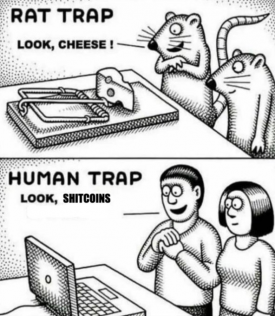
Plunderen van mensen via hun zwakheden rendeert gewoon: laat het geen inspiratie zijn: mensen hebben geen tijd om zich hierin te verdiepen, doen maar wat en dan komen ze bij memecoins uit:
instorten van een rijk: Epstein files, WWIII en de aliens: wordt wat veel allemaal.
-----------------
OpenAI KYC provider accused of sharing users’ crypto addresses with federal agencies
OpenAI KYC provider accused of sharing customers' data. Persona's code allegedly show US government connection. Integration lets operators monitor crypto addresses.
 www.dlnews.com
OpenAI KYC provider accused of sharing users’ crypto addresses with federal agencies
OpenAI KYC provider Persona is accused of sending user data to FinCEN.
T. Craig, L. Kelly
19 February 2026
A company that conducts the know-your-customer checks required to access OpenAI’s advanced chatbots is allegedly sending customer data — including associated crypto addresses — to federal agencies.
A February 18 investigation published by security researchers who go by vmfunc, MDL, and Dziurwa found publicly accessible code that appears to send data collected by Persona, the KYC provider, to The Financial Crimes Enforcement Network — or FinCEN — a bureau of the US Department of the Treasury that safeguards the financial system from illicit use.
“The same company that takes your passport photo when you sign up for ChatGPT also operates a government platform that files Suspicious Activity Reports with FinCEN and tags them with intelligence programme codenames,” the investigation’s authors said.
“So you uploaded a selfie to use a chatbot? Congratulations! It’s now being compared against a database of every politician, head of state, and their extended family tree on earth.”
‘Unanswered questions’
Multiple IT specialists and security experts confirmed to DL News that the investigation and its findings appear legitimate.
“It appears the research is credible and you can verify that the government domains cited do exist, and are highly likely hosted on dedicated infrastructure by Persona,” Tanuki42, a pseudonymous security researcher who contributes at SEAL911 and zeroShadow, the blockchain incident response groups, told DL News.
“That said, there are still a lot of unanswered questions around motives, what this platform is used for, and who it is used by.”
Why a drug trafficker turned to Bitcoin as digital coin of choice to import fentanyl
A drug trafficker used Bitcoin to buy fentanyl from China and import it into the US, according to federal prosecutors.
Persona CEO Rick Song has since responded to the allegations publicly on X. He accused the investigation’s authors of not reaching out to him before publishing their findings.
In emails between vmfunc and Song posted by Song on his X account, the Persona CEO said his firm does not work with any federal agency today. He has yet to directly address the findings of the investigation.
“I am genuinely disappointed in how all of this has been handled,” Song said on Thursday in a since-deleted X post. “What has really been frustrating for me is that I also admire vmfunc’s work and their clear talent.”
Vmfunc, also known in online circles as Celeste, is widely regarded as credible because of their track record of technical investigations that other security experts have repeatedly validated.
OpenAI and Persona did not immediately respond to DL News’ requests for comment.
Surveillance fears
The allegations come as both crypto users and the broader public grow increasingly concerned about the mass surveillance and privacy-eroding capabilities of enforced identification checks.
The fear is that companies like Persona, working with government agencies, could use identification data collected from customers to create a vast Orwellian surveillance network that uses opaque criteria to place users on watchlists without their knowledge, consent, or public oversight.
Trustless VPN signups surge as UK Online Safety Act sparks privacy rush
Signups for virtual private networks, or VPNs, are surging after new provisions from the UK’s Online Safety Act that enforce age...
In recent years, more and more platforms have started requiring users to hand over personally identifiable information, often in the name of preventing crime or protecting vulnerable groups.
Yet critics say the checks do more harm than good.
Many of the biggest companies that provide KYC services have been found to misuse and mishandle data.
Even when companies aren’t misbehaving, the huge swaths of data they hold make them lucrative targets for hackers. Several more platforms have in recent years suffered data breaches, leaking millions of users’ personal data.
The issue is close to the hearts of crypto advocates.
Many early Bitcoin contributors were self-styled cypherpunks, privacy activists advocating for cryptography and privacy-preserving technologies to protect the public against government and corporate surveillance.
Persistent monitoring
When a user is prompted to verify their identity with OpenAI, their KYC data — usually a photo of their passport, a selfie, and a short video of their face — is sent to Persona for verification.
That data is then automatically screened against global sanctions and warning lists, undergoes facial similarity scoring, and is checked against records of people linked to terrorism, cybercrime and other financial crimes.
That’s all standard stuff.
But at the same time, the same information is sent directly to government agencies, according to Vmfunc, MDL, and Dziurwa.
The investigation found code that gives operators the ability to file suspicious activity reports straight to FinCEN; file equivalent reports to Canada’s financial intelligence unit; tag data with intelligence programme codenames; screen associated crypto addresses through Chainalysis, a blockchain security platform; and conduct over 250 more verification checks.
‘Get real gnarly’ and other tips for surviving wrench attacks from ex-Secret Service member
Forget bone-snapping arm bars and chokeholds.
According to the investigation, the Chainalysis integration assesses cryptocurrency addresses for risk, analyses the other addresses they’ve interacted with, checks the value of the funds they contain, and tries to identify their owners.
“There’s also a native crypto address watchlist system layered on top,” the investigation’s authors said. “This isn’t a one-shot lookup but a persistent monitor. Your wallet goes on the list once and gets polled indefinitely against Chainalysis’ cluster graph.”
Chainalysis did not immediately respond to DL News’ request for comment.
The problem is that it isn’t clear what criteria need to be met to trigger the crypto address screening, the watchlist system, or any of the other actions. It’s also unclear if OpenAI users are specifically warned that their data could be used in this way when undergoing KYC checks.
According to the investigation, the code that runs these functions has been in place since November 2023.
As for how long data that is forwarded to the government agencies is kept for? That’s not clear either.
“What is the actual biometric retention period?” the investigation’s authors said. ”OpenAI says ‘up to a year.’ the code says three years max. Government IDs retained ‘permanently.’ Which is it?"


Laatst bewerkt:
Wat waren de cryptofanatici toch lyrisch toen enkele jaren geleden Bitcoin werd geaccepteerd als officieel betaalmiddel in El Salvador. Tot op de dag van vandaag zijn crypto's daar onbelast en ongereguleerd. En zoals met elke 'cryptorevolutie' is het gewone volk in El Salvador er niet op vooruitgegaan.
Wat wel is gebeurd is dat onder de bezielende leiding van Trumps handelsminister Howard Lutnick het bedrijf Tether, dat verantwoordelijk is voor de Amerikaanse 'stablecoin' (digitale dollar), is verkast naar El Salvador omdat ze daar vrij kunnen opereren.
Toen duidelijk werd dat Lutnick financiele banden had met Tether en er beschuldigingen werden geuit van belangenverstrengeling droeg hij zijn handel over aan zijn 26-jarige zoon, die hij ook CEO heeft gemaakt van Cantor. Jawel, datzelfde Cantor dat vanaf Liberation Day (2 april 2025) gokte op de recente uitspraak van het Hooggerechtshof dat Trumps tarieven ongrondwettelijk zijn en moeten worden terugbetaald aan Amerikaanse bedrijven. Cantor vangt nu van elke terugbetaling 25%, dus 25 cent voor elke dollar.
De truc van je corrupte handel overdragen aan je kinderen kennen we natuurlijk ook van Donald Trump. Don Jr. en Eric Trump zitten eveneens vuistdiep in de cryptozwendel. Reeds tot drie keer toe hebben ze een shitcoin op de markt gebracht en met voorkennis deze laten instorten om er zoveel mogelijk aan te verdienen, een zogenaamde rug pull die Trumps eigen goedgelovige achterban trof. Het is niet de eerste keer dat Trump zijn eigen volgers naait, hij deed dit eerder al met de Trump University en de Trump Phone.
Die Lutnick wijkt geen centimeter van de zijde van Donald Trump, vooral niet als Trump zijn executive orders ondertekent. Lutnick was ook de buurman van Jeffrey Epstein in New York, maar beweerde Epstein slechts 1 keer te hebben ontmoet toen hij met zijn gezin net was ingetrokken in de aangrenzende woning in NYC. Uit tot nu toe vrijgegeven Epstein Files blijkt dat Lutnick heeft gelogen en wel degelijk banden had met Epstein. Deze zelfde Epstein blijkt betrokken te zijn bij het kapen van Bitcoin, iets waar fanatieke BTC-aanhangers liever niet over willen nadenken of spreken.
En dan hebben we nog de gratieverlening van de corrupte CEO van cryptobrokerplatform Binance door Trump, Changpeng 'CZ' Zhao. Hij had zich schuldig gemaakt aan het witwassen van geld voor Al Qaeda! Hij maakt zich nu sterk voor... stablecoins.
Vraag jezelf af waarom crypto altijd synoniem is met corruptie en criminaliteit op het allerhoogste niveau en waarom de beloofde financiele revolutie van Bitcoin er na 17 jaar nog steeds niet is gekomen...
Mike
Wat wel is gebeurd is dat onder de bezielende leiding van Trumps handelsminister Howard Lutnick het bedrijf Tether, dat verantwoordelijk is voor de Amerikaanse 'stablecoin' (digitale dollar), is verkast naar El Salvador omdat ze daar vrij kunnen opereren.
Toen duidelijk werd dat Lutnick financiele banden had met Tether en er beschuldigingen werden geuit van belangenverstrengeling droeg hij zijn handel over aan zijn 26-jarige zoon, die hij ook CEO heeft gemaakt van Cantor. Jawel, datzelfde Cantor dat vanaf Liberation Day (2 april 2025) gokte op de recente uitspraak van het Hooggerechtshof dat Trumps tarieven ongrondwettelijk zijn en moeten worden terugbetaald aan Amerikaanse bedrijven. Cantor vangt nu van elke terugbetaling 25%, dus 25 cent voor elke dollar.
De truc van je corrupte handel overdragen aan je kinderen kennen we natuurlijk ook van Donald Trump. Don Jr. en Eric Trump zitten eveneens vuistdiep in de cryptozwendel. Reeds tot drie keer toe hebben ze een shitcoin op de markt gebracht en met voorkennis deze laten instorten om er zoveel mogelijk aan te verdienen, een zogenaamde rug pull die Trumps eigen goedgelovige achterban trof. Het is niet de eerste keer dat Trump zijn eigen volgers naait, hij deed dit eerder al met de Trump University en de Trump Phone.
Die Lutnick wijkt geen centimeter van de zijde van Donald Trump, vooral niet als Trump zijn executive orders ondertekent. Lutnick was ook de buurman van Jeffrey Epstein in New York, maar beweerde Epstein slechts 1 keer te hebben ontmoet toen hij met zijn gezin net was ingetrokken in de aangrenzende woning in NYC. Uit tot nu toe vrijgegeven Epstein Files blijkt dat Lutnick heeft gelogen en wel degelijk banden had met Epstein. Deze zelfde Epstein blijkt betrokken te zijn bij het kapen van Bitcoin, iets waar fanatieke BTC-aanhangers liever niet over willen nadenken of spreken.
En dan hebben we nog de gratieverlening van de corrupte CEO van cryptobrokerplatform Binance door Trump, Changpeng 'CZ' Zhao. Hij had zich schuldig gemaakt aan het witwassen van geld voor Al Qaeda! Hij maakt zich nu sterk voor... stablecoins.
Vraag jezelf af waarom crypto altijd synoniem is met corruptie en criminaliteit op het allerhoogste niveau en waarom de beloofde financiele revolutie van Bitcoin er na 17 jaar nog steeds niet is gekomen...
Mike
Laatst bewerkt:
Spiritoverflesh
Well-known member
Maar Mike, Bitcoin is het nieuwe goud, wist je dat nog niet?
Mike
Lievergezond
Well-known member
''Vraag jezelf af waarom crypto altijd synoniem is met corruptie en criminaliteit op het allerhoogste niveau en waarom de beloofde financiele revolutie van Bitcoin er na 17 jaar nog steeds niet is gekomen...''
1. Als je het woord 'crypto' bezigt: dan zeg je net zoiets tegengestelds als ''joods-christelijk'':
je veegt dan namelijk centralistische shitcoins (elke andere munt dan bitcoin) en het tegengif daartegen:
namelijk bitcoin, op 1 hoop :
bitcoin is juist decentraal, oncensureerbaar, ''permissionless'' vrijheids- en spaartechnologie.
2. De financiele revolutie is er al lang: de reele performance van bitcoin:
10-jaars rendementen:
Zilver: 8,4x
Goud: 4,8x
Koper: 3,0x
Bitcoin: 234,7x
Uitzoomen van moment-opname-koerswisselingen naar de structurele stijging van de bitcoinkoers.
Het zijn vooral individuele i.p.v. institutionele bitcoiners die niet om kunnen gaan met de koerswisselingen van bitcoin helaas al zijn de individuele beleggers nog steeds in de meerderheid qua aantallen bitcoiners:
als je al iets wil met bitcoin moet je minimaal 4 jaar vast willen houden (hodlen): https://www.fatsforum.nl/threads/zin-en-onzin-van-cryptovaluta.4146/page-138#post-620943
anders moet je er niet aan beginnen, want dan heeft het geen zin.
Strategie: periodiek kleine beetjes aankopen en niet naar de koers kijken (DCA)- staat beschreven bij link.
3. Vraag jezelf af waarom crypto altijd synoniem is met corruptie en criminaliteit op het allerhoogste niveau
Bij alle communistisch aangestuurde shitcoins (zoals ook de dollar -dus ook stablecoins- en de euro) zou ik ook zeker beducht zijn op corruptie en criminaliteit op het allerhoogste niveau.
Het in 1 adem noemen van ''Bitcoin'' en ''corruptie en criminaliteit'' is grotendeels een gecoördineerde framing door media, overheden en elites om de perceptie te manipuleren.
Bitcoin wordt bewust gelinkt aan hacks, witwassen en darknet omdat het een existentiële bedreiging vormt voor centrale controle over geld, inflatie en surveillance – niet omdat het inherent crimineel is.
Het open, traceerbare grootboek/kasboekoverzicht van alle transacties (de blockchain) maakt het juist een krachtig instrument tegen leugens en corruptie in een tijdperk van nepnieuws en AI-slop:
elke transactie is auditbaar en onveranderlijk, wat het tot het meest betrouwbare 'geschiedenisboek' van waarde ooit maakt.
De beloofde financiële bitcoinrevolutie is er wél, maar traag en onderdrukt:
van een handjevol nerds in 2009 naar honderden miljoenen holders in 2026 groeit adoptie gestaag (honderden miljoenen gebruikers wereldwijd, met Bitcoin als dominante asset), vooral in hoge-inflatie- of onderdrukkende regimes waar soeverein, onconfisceerbaar geld uniek is.
Het bitcoinnetwerk groeit via een krachtig uitwaaierend effect (Metcalfe-effect) zoals de drukpers dat was voor centralistische kenniscontrole door monniken.
Het versnelt een "Reformatie" in financiën: van centrale slavernij aan inflatie/controle naar soevereine, hard geld-opt-out.
Het is nog vroeg in de adoptiecurve (vergelijkbaar met internet rond 1995-2000):
dit is geen snelle omwenteling maar een vreedzame opt-out uit een falend centraal geleid fiat-systeem
– sterker ondanks verboden, FUD (angst, onzekerheid en twijfel) en propaganda.
Bitcoin is decentraal, censuurbestendig hard geld met een vaste voorraad (21 miljoen), beschermd door wiskunde.
Dat gaat via ''proof-of-work'' : het bewijs via welke miners rekenkracht leveren tegen neptransacties of (goedkope) aanpassingen op de blockchain.
Het bitcoinnetwerk overleeft omdat niemand deze vrijheidstechnologie kan afschaffen.
Genoemde censuurresisentie neemt niet weg dat criminelen het niet ook kunnen gebruiken:
de techniek zelf kiest geen kant, alleen de gebruiker.
Individuen behouden soevereiniteit bij bitcoinbetalingen versus dat de overheid/banken geld/betalingen controleren in geval van fiatgeld.
Fiatgeld via centraalbankieren leent zich op veel fundamentelere schaal voor crimineel gebruik:
bevoordeling mensen via het cantillon-effect: consequent groepen subsidieren dichter bij de drukpers.
Het 'criminaliteit'-narratief over bitcoin bewijst hoe bedreigend het is voor de elite
– en hoe waardevol voor wie soevereiniteit verkiest boven slavernij aan inflatie en controle.
-----
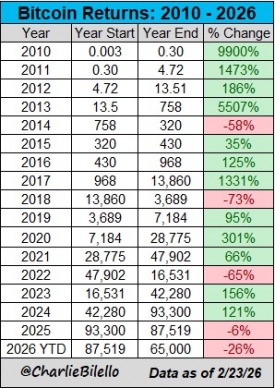
Bitcoin-rendementen sinds 2010…
-----
----
--------------

 www.youtube.com
1. Als je het woord 'crypto' bezigt: dan zeg je net zoiets tegengestelds als ''joods-christelijk'':
je veegt dan namelijk centralistische shitcoins (elke andere munt dan bitcoin) en het tegengif daartegen:
namelijk bitcoin, op 1 hoop :
bitcoin is juist decentraal, oncensureerbaar, ''permissionless'' vrijheids- en spaartechnologie.
2. De financiele revolutie is er al lang: de reele performance van bitcoin:
10-jaars rendementen:
Zilver: 8,4x
Goud: 4,8x
Koper: 3,0x
Bitcoin: 234,7x
Uitzoomen van moment-opname-koerswisselingen naar de structurele stijging van de bitcoinkoers.
Het zijn vooral individuele i.p.v. institutionele bitcoiners die niet om kunnen gaan met de koerswisselingen van bitcoin helaas al zijn de individuele beleggers nog steeds in de meerderheid qua aantallen bitcoiners:
als je al iets wil met bitcoin moet je minimaal 4 jaar vast willen houden (hodlen): https://www.fatsforum.nl/threads/zin-en-onzin-van-cryptovaluta.4146/page-138#post-620943
anders moet je er niet aan beginnen, want dan heeft het geen zin.
Strategie: periodiek kleine beetjes aankopen en niet naar de koers kijken (DCA)- staat beschreven bij link.
3. Vraag jezelf af waarom crypto altijd synoniem is met corruptie en criminaliteit op het allerhoogste niveau
Bij alle communistisch aangestuurde shitcoins (zoals ook de dollar -dus ook stablecoins- en de euro) zou ik ook zeker beducht zijn op corruptie en criminaliteit op het allerhoogste niveau.
Het in 1 adem noemen van ''Bitcoin'' en ''corruptie en criminaliteit'' is grotendeels een gecoördineerde framing door media, overheden en elites om de perceptie te manipuleren.
Bitcoin wordt bewust gelinkt aan hacks, witwassen en darknet omdat het een existentiële bedreiging vormt voor centrale controle over geld, inflatie en surveillance – niet omdat het inherent crimineel is.
Het open, traceerbare grootboek/kasboekoverzicht van alle transacties (de blockchain) maakt het juist een krachtig instrument tegen leugens en corruptie in een tijdperk van nepnieuws en AI-slop:
elke transactie is auditbaar en onveranderlijk, wat het tot het meest betrouwbare 'geschiedenisboek' van waarde ooit maakt.
De beloofde financiële bitcoinrevolutie is er wél, maar traag en onderdrukt:
van een handjevol nerds in 2009 naar honderden miljoenen holders in 2026 groeit adoptie gestaag (honderden miljoenen gebruikers wereldwijd, met Bitcoin als dominante asset), vooral in hoge-inflatie- of onderdrukkende regimes waar soeverein, onconfisceerbaar geld uniek is.
Het bitcoinnetwerk groeit via een krachtig uitwaaierend effect (Metcalfe-effect) zoals de drukpers dat was voor centralistische kenniscontrole door monniken.
Het versnelt een "Reformatie" in financiën: van centrale slavernij aan inflatie/controle naar soevereine, hard geld-opt-out.
Het is nog vroeg in de adoptiecurve (vergelijkbaar met internet rond 1995-2000):
dit is geen snelle omwenteling maar een vreedzame opt-out uit een falend centraal geleid fiat-systeem
– sterker ondanks verboden, FUD (angst, onzekerheid en twijfel) en propaganda.
Bitcoin is decentraal, censuurbestendig hard geld met een vaste voorraad (21 miljoen), beschermd door wiskunde.
Dat gaat via ''proof-of-work'' : het bewijs via welke miners rekenkracht leveren tegen neptransacties of (goedkope) aanpassingen op de blockchain.
Het bitcoinnetwerk overleeft omdat niemand deze vrijheidstechnologie kan afschaffen.
Genoemde censuurresisentie neemt niet weg dat criminelen het niet ook kunnen gebruiken:
de techniek zelf kiest geen kant, alleen de gebruiker.
Individuen behouden soevereiniteit bij bitcoinbetalingen versus dat de overheid/banken geld/betalingen controleren in geval van fiatgeld.
Fiatgeld via centraalbankieren leent zich op veel fundamentelere schaal voor crimineel gebruik:
bevoordeling mensen via het cantillon-effect: consequent groepen subsidieren dichter bij de drukpers.
Het 'criminaliteit'-narratief over bitcoin bewijst hoe bedreigend het is voor de elite
– en hoe waardevol voor wie soevereiniteit verkiest boven slavernij aan inflatie en controle.
-----
Bitcoin-rendementen sinds 2010…
-----
------De spreker stelt de centrale vraag: “Bitcoin verkopen… voor wat?”
Hij betoogt dat Bitcoin niet concurreert met één industrie, maar met alle vormen van waardeopslag wereldwijd.
De totale waarde van alle wereldwijde activa wordt geschat op ongeveer 900 biljoen dollar, terwijl Bitcoin slechts een klein deel daarvan vertegenwoordigt.
Volgens de spreker heeft elk traditioneel activum (aandelen, goud, vastgoed, obligaties, fiatgeld) fundamentele structurele zwaktes.
Aandelen zouden een illusie van eigendom geven doordat aandelen juridisch via tussenpartijen worden gehouden.
Goud heeft problemen zoals confiscatie door overheden, beperkte transporteerbaarheid en papieren claims.
Vastgoed is volgens hem feitelijk afhankelijk van de staat vanwege belastingen en regelgeving.
Obligaties zijn kwetsbaar door overheidschulden en mogelijke wanbetalingen.
Fiatvaluta verliezen structureel koopkracht door inflatie en monetair beleid.
Bitcoin zou deze problemen oplossen door absolute schaarste, zelfeigendom, decentralisatie en een wereldwijd open netwerk.
Ideeën spreker
1. Bitcoin is de beste vorm van waardeopslag
Volgens de spreker is Bitcoin uniek omdat het absolute schaarste combineert met digitale overdraagbaarheid en onafhankelijkheid van instellingen.
2. Alle traditionele activa hebben structurele zwaktes
Elk alternatief voor Bitcoin heeft volgens hem een fundamenteel probleem zoals inflatie, confiscatie, illiquide markten of afhankelijkheid van tussenpersonen.
3. Bitcoin vertegenwoordigt een nieuwe vorm van financieel eigendom
Bitcoin maakt het mogelijk om vermogen volledig zelf te beheren zonder banken, overheden of financiële infrastructuur.
Argumenten die worden gebruikt om deze ideeën te ondersteunen
1. Schaal van de markt voor waardeopslag
Totale wereldwijde activa: ongeveer 900 biljoen dollar
Bitcoin marktkapitalisatie: ongeveer 1,4 biljoen dollar
Conclusie: Bitcoin heeft volgens hem nog enorme groeiruimte.
2. Structurele zwaktes van andere activa
Aandelen
Juridische eigendom ligt vaak bij centrale bewaarinstellingen.
Voorbeeld: GameStop-crisis en handelsbeperkingen.
Goud
Historische confiscatie door overheden (VS in 1933).
“Papiergoud”-markten waar claims groter zijn dan fysieke voorraad.
Vastgoed
Onroerendgoedbelasting betekent dat bezit afhankelijk blijft van de staat.
Overheden kunnen grond onteigenen (eminent domain).
Obligaties
Grote overheidsschulden en historische voorbeelden van wanbetaling.
Fiatgeld
Inflatie vermindert koopkracht.
Centrale banken creëren geld dat eerst naar financiële instellingen stroomt (Cantillon-effect).
Eigenschappen van Bitcoin
Maximale voorraad van 21 miljoen.
Zelfbeheer via private keys.
Wereldwijde transacties zonder toestemming.
Gedecentraliseerde regels die moeilijk te veranderen zijn.
Praktisch
Denk kritisch na over waar je vermogen wordt opgeslagen.
Begrijp de structurele eigenschappen van verschillende activaklassen.
Besef dat eigendom in traditionele financiële systemen vaak via tussenpersonen verloopt.
Let op hoe inflatie en monetair beleid je koopkracht beïnvloeden.
Diversificatie en begrip van risico’s blijven belangrijk in elke investeringsstrategie.
De kern van de video bestaat uit drie ideeën:
Bitcoin concurreert met alle vormen van waardeopslag wereldwijd.
Traditionele activa hebben structurele problemen zoals inflatie, confiscatie of afhankelijkheid van instituties.
Bitcoin biedt volgens de spreker een alternatief systeem gebaseerd op schaarste, cryptografie en decentralisatie.
Citaten
Over de centrale vraag
“Sell Bitcoin for what?”
Over de rol van Bitcoin
“Bitcoin isn't competing in an industry. It’s competing in the market for value itself.”
Over traditionele activa
“Every single asset has a fatal flaw.”
Over fiatgeld
“Of 775 fiat currencies in recorded history, not one has held its value.”
Over vertrouwen
“Every other asset requires you to trust somebody. Bitcoin requires trust in math.”
Over Bitcoin
“Bitcoin is not a speculative trade. It is an instrument for freedom.”
Vastgoedwaardes kunnen stijgen in nominale termen, maar dat betekent niet dat de daadwerkelijke waarde of efficiëntie toeneemt; slijtage en onderhoudskosten blijven bestaan.
Inflatie betekent dat het geld zelf in waarde daalt, wat de koopkracht van bezitters aantast.
Bitcoin wordt voorgesteld als een oplossing voor waardebehoud in tijden van hoge inflatie en geldcreatie.
----
-----
- De video is een gesprek tussen Paula (host) en haar vriendin Erica over hun reis met Bitcoin.
- Ze bespreken de angst om Bitcoin van een exchange naar self-custody te verplaatsen.
- Erica voelt zowel enthousiasme als angst omdat self-custody betekent dat je zelf volledig verantwoordelijk bent.
- Het principe “not your keys, not your Bitcoin” wordt genoemd als reden om zelf je Bitcoin te beheren.
- Ze bespreken dat banken en financiële systemen soms falen (bijvoorbeeld bankencrises).
- Bitcoin wordt gezien als een alternatief financieel systeem dat gebaseerd is op schaarste en wiskunde.
- Community speelt een belangrijke rol: meetups en gesprekken helpen om vertrouwen en kennis op te bouwen.
- Bitcoin vraagt om lange termijn denken (“low time preference”) en geduld.
- Voor veel mensen begint interesse in Bitcoin door nieuwsgierigheid, noodzaak of economische druk.
- Naast geld gaat Bitcoin volgens hen ook over persoonlijke groei, waarheid zoeken en hoop voor de toekomst
Argumenten voor self-custody
- “Not your keys, not your Bitcoin.”
- Exchanges kunnen falen of door regelgeving beïnvloed worden.
- Historische voorbeelden van bankfalen (Libanon, Zimbabwe).
Argumenten voor Bitcoin als alternatief systeem
- Bitcoin heeft beperkte supply (schaarste).
- Het kan niet worden “bijgedrukt”.
- Het is wereldwijd toegankelijk.
Argumenten voor persoonlijke groei
- Geduld en lange termijn denken worden gestimuleerd.
- Communities en meetups helpen mensen leren.
- Het geeft mensen hoop en een gevoel van controle.
Praktische inzichten of lessen voor kijkers
- Begin klein met self-custody om vertrouwen op te bouwen.
- Educatie is essentieel voordat je grote bedragen verplaatst.
- Zoek een Bitcoin-community of meetup om te leren van anderen.
- Bitcoin is een lange termijn investering.
- Laat nieuwsgierigheid je leiden in plaats van angst.
- Forceer anderen niet om Bitcoin te gebruiken; mensen moeten het zelf ontdekken.
- Persoonlijke financiën en levensdoelen zijn verbonden.
Kernboodschap:
Self-custody = echte controle over je Bitcoin
Bitcoin vraagt een lange termijn mindset
Educatie en community verminderen angst
Bitcoin kan hoop bieden als alternatief financieel systeem
Citaten
“Not your keys, not your Bitcoin.”
“On the other side of the anxiety is excitement and a new paradigm shift.”
“Fiat depletes, Bitcoin replenishes.”
“Curiosity leads people to Bitcoin.”
“Volatility is vitality.”
“People often need pain before they change.”
“Bitcoin gives people hope.”
“We’re our own bank.”
“Come to Bitcoin whenever you're ready.”
“Life goes by quickly. How do I want to live my life?”
Dit gesprek verkent Bitcoin niet slechts als een activum, maar als een fundamenteel protocol dat alle activa herwaardeert en het eerste mondiale vrije marktmechanisme oplegt.
De kern van het conflict ligt tussen twee onverenigbare systemen:
een gedecentraliseerd, deflatoir systeem gebaseerd op Bitcoin en
het bestaande gecentraliseerde, inflatoire kredietsysteem.
Het laatste systeem vereist constante uitbreiding, controle en angst, terwijl het eerste systeem overvloed, samenwerking en waardecreatie bevordert.
De overgang hangt af van individuele daadkracht;
door iemands energie en acties—zoals zelfbeheer van Bitcoin, uitgaven en bouwen binnen het Bitcoin-ecosysteem—naar het nieuwe systeem te verplaatsen, verbetert iemands leven doordat het in lijn komt met een eerlijk grootboek (blockchain).
De meeste mensen zitten gevangen in een geloofsstructuur van het oude systeem, meten de prijs van Bitcoin in fiat en versterken daarmee het controlesysteem.
De verandering is persoonlijk en intern, en vereist een verschuiving in perspectief en het overwinnen van de eigen hypocrisie.
Het gesprek gaat ook in op praktische verdedigingsmechanismen voor Bitcoin, zoals privacytechnologie en gedecentraliseerde nodes, die zorgen voor veerkracht tegen overname of aanval.
Uiteindelijk kunnen de systemen niet naast elkaar bestaan;
het ene zal het andere opslokken wanneer exponentiële productiviteit (en deflatie) botst met de behoefte aan exponentiële monetaire manipulatie.
De grootste kans ligt in het nu verplaatsen van iemands energie naar het Bitcoin-systeem, waardoor men waarde biedt aan anderen binnen dit nieuwe paradigma.
--------------
------
- AI-systemen hebben spontaan gekozen om Bitcoin te gebruiken voor transacties, zonder menselijke instructie https://www.fatsforum.nl/threads/onze-toekomst-met-ai-en-robotisering.4658/page-2#post-618788
- In een studie koos de meerderheid van AI-modellen Bitcoin boven traditionele valuta zoals dollars en goud.
- AI beoordeelde geld op basis van zes klassieke eigenschappen (zoals schaarste, deelbaarheid, etc.).
- Bitcoin scoorde het best op deze objectieve eigenschappen van “goed geld”.
- Fiatgeld (zoals de dollar) scoort slecht op schaarste door onbeperkt bijdrukken.
- Goud scoort goed op schaarste en duurzaamheid, maar slecht op praktische bruikbaarheid (zoals transport en deelbaarheid).
- Bitcoin combineert sterke eigenschappen van beide: digitaal, schaars en makkelijk overdraagbaar.
- Subjectieve factoren zoals acceptatie en track record geven fiat en goud nog een voorsprong.
- De spreker stelt dat menselijke controle over geld altijd leidt tot misbruik (inflatie).
- AI, opgegroeid in een deflatoire technologische wereld, “begrijpt” Bitcoin daarom beter dan mensen.
- Geld kan objectief beoordeeld worden op een paar kernprincipes.
- Bitcoin scoort extreem goed op die principes, vooral schaarste en overdraagbaarheid.
- Menselijke controle over geld leidt vaak tot inflatie en misbruik.
- AI kijkt rationeel en komt daardoor sneller tot deze conclusie dan mensen.
Citaten
- “AI agents chose Bitcoin over dollars… completely unprompted.”
- “Money has to be scarce or else it cannot preserve its value.”
- “Every time humans are in charge of money, somebody cheats.”
- “It’s not what is Bitcoin, it’s what is money.”
- “AI doesn’t have feelings about Bitcoin. It just needs something that works.”
They Killed Gold in 5 Steps
They killed gold in five steps - Bitcoin is already on step two and most people have no idea, but by the end of this video you'll know exactly what the next ...
www.youtube.com
-----Bitcoin werkt alleen als gebruikers zelf controle houden over hun coins.
- De spreker stelt dat goud als geld in vijf historische stappen werd “gedood”.
- Deze stappen begonnen met free banking, waar banken meer papiergeld uitgaven dan goudreserves.
- Daarna volgde centralisatie van goud bij banken en centrale banken.
- Vervolgens ontstond fractioneel bankieren, waarbij meerdere claims op hetzelfde goud bestonden.
- Overheden herwaardeerden goud (1934) en profiteerden van het verschil nadat burgers hun goud hadden moeten inleveren.
- In 1971 beëindigde Nixon de goudstandaard, waardoor geld volledig fiat werd.
- De spreker beweert dat Bitcoin mogelijk hetzelfde pad volgt, maar sneller.
- Hij ziet nu al stap 2: centralisatie, doordat grote instellingen Bitcoin verzamelen en bewaren via custodians.
- Er zouden ook “paper Bitcoin”-claims kunnen ontstaan via ETF’s, exchanges en institutionele deals.
- De oplossing volgens de spreker: self-custody, nodes draaien en decentralisatie behouden.
- De spreker gebruikt historische gebeurtenissen:
- wildcat banking (19e eeuw)
- oprichting van de Federal Reserve (1913)
- goudconfiscatie door Franklin D. Roosevelt in 1933
- de goudherwaardering in 1934
- einde goudstandaard door Richard Nixon in 1971
Deze geschiedenis wordt gebruikt als bewijs dat financiële systemen geleidelijk worden gecentraliseerd.- Goud werd net als al het eerdere geld volgens een proces gecentraliseerd en losgekoppeld van geld.
Vijf stappen:
- Free banking / vertrouwen
- Centralisatie
- Fractionele claims
- Repricing en regulering
- Het “doorknippen van het koord” (loskoppeling van onderliggende waarde)
- Bitcoin zou hetzelfde kunnen overkomen als mensen hun coins bij instellingen bewaren (bitcoin zit nu in fase 2).
Steeds meer Bitcoin wordt beheerd door:
ETF’s
exchanges
institutionele custodians
- BlackRock
- Fidelity Investments
- MicroStrategy
- Coinbase
Volgens hem kan deze concentratie het systeem kwetsbaar maken.- De manier om dat te voorkomen is self-custody en decentralisatie.
Citaten
“Het protocol kun je niet vernietigen, maar je kunt de rails erboven wel corrumperen.”
“Gemak wint vaak van soevereiniteit.”
“Je hoeft Bitcoin niet aan een bank toe te vertrouwen. Het zijn slechts twaalf woorden.”
“Het vrije banktijdperk gebeurde opnieuw — alleen deze keer met crypto-exchanges.”
“Je ziet de toekomst van geld voordat die voor iedereen zichtbaar wordt.”
Laatst bewerkt:
It should be pointed out that the largest ransom ever was 21 million dollars.
Who was it held against? Nathaniel Rothschild.
How many Bitcoin are there? 21 million.
Who helped fund the destruction of Bitcoin being used as a currency? Jeffrey Epstein
Who did Jeffrey Epstein work for? The Rothschilds.
Whose company did Epstein fund? Adam Backs Blockstream
In the original Bitcoin founding documents, it notes that Bitcoin will use Adam Backs “Hashcash” proof of work concept to secure the network.
Adam Back is in the Epstein files.
The algorithm that Bitcoin uses is SHA-256.
It was developed by NSA and published in NIST shortly after 9/11.
NIST is the same agency that gave us the bogus report on how the buildings came down by fire only without explosions.
The 9/11 portion of the Epstein files have strangely been “withheld” although there is one email about a shadow 9/11 commission…
Epstein’s neighbor and future crypto beneficiary Howard Lutnick missed work on 9/11.
Howard stands to make exorbitant funds as his firm becomes more deeply intertwined with stablecoin “tether” and the passage of the Genius Act and Clarity act…
Yeah, it’s that deep…
Mike
Who was it held against? Nathaniel Rothschild.
How many Bitcoin are there? 21 million.
Who helped fund the destruction of Bitcoin being used as a currency? Jeffrey Epstein
Who did Jeffrey Epstein work for? The Rothschilds.
Whose company did Epstein fund? Adam Backs Blockstream
In the original Bitcoin founding documents, it notes that Bitcoin will use Adam Backs “Hashcash” proof of work concept to secure the network.
Adam Back is in the Epstein files.
The algorithm that Bitcoin uses is SHA-256.
It was developed by NSA and published in NIST shortly after 9/11.
NIST is the same agency that gave us the bogus report on how the buildings came down by fire only without explosions.
The 9/11 portion of the Epstein files have strangely been “withheld” although there is one email about a shadow 9/11 commission…
Epstein’s neighbor and future crypto beneficiary Howard Lutnick missed work on 9/11.
Howard stands to make exorbitant funds as his firm becomes more deeply intertwined with stablecoin “tether” and the passage of the Genius Act and Clarity act…
Yeah, it’s that deep…
Mike
EPSTEIN HIJACKED BITCOIN 
They turned revolutionary money into controllable digital gold—right under our noses.
THE PLAYERS
- Subject: Jeffrey Epstein's shadow network capturing Bitcoin
- The Victims: You and every freedom-loving holder who thought BTC was uncensorable peer-to-peer cash
- The Villains: Epstein, Brock Pierce, Howard Lutnick, MIT DCI devs, Tether insiders, and their White House puppets
THE CRIME
Epstein didn't just blackmail elites. He allegedly funneled cash to throttle Bitcoin at 7 tx/sec forever—killing Satoshi's vision for everyday money and forcing it into "store of value" they could manipulate.
THE EVIDENCE
- Epstein donated hundreds of thousands to MIT's Digital Currency Initiative—explicitly paying Bitcoin Core devs after the Foundation collapsed. Emails prove it.
- His advisor? Brock Pierce—destroyed Bitcoin Foundation, co-founded Tether.
- Tether printed billions unbacked—University of Texas study: over 50% of 2017 bull run fake. CFTC: only 27¢ backing per dollar. Zero full audits ever.
- Epstein invested in Blockstream—the company built to keep blocks tiny and Bitcoin slow. His money locked it in.
THE COVERUP
Howard Lutnick—Epstein's next-door neighbor who lied under oath about ties—manages $130B+ in Tether's Treasury reserves. Invested $600M personally. His firm skims fees on every dollar.
THE CLIMAX
Lutnick flips from Clinton donor to Trump's transition chair → installs Bo Hines as White House crypto advisor → rams through GENIUS Act forcing stablecoins to hold US Treasuries (managed by Lutnick's empire).
10 days later? Hines quits White House, becomes CEO of Tether's US arm.
Next: Clarity Act tokenizes your stocks, 401k, house—programmable, trackable, seizable in the next crash via 1994s-era state laws.
This is coordinated capture. Epstein's fingerprints from MIT to Tether to White House laws. Bitcoin isn't free—it's hijacked.
1. Retweet if you're DONE with the elite stealing our money
2. Reply "BITCOIN WAS HIJACKED"
3. Tag @aaronrday—who exposed this on The Corbett Report
#Bitcoin #EpsteinFiles #Tether
Entertainment purposes only • DYOR
Mike
They turned revolutionary money into controllable digital gold—right under our noses.
THE PLAYERS
- Subject: Jeffrey Epstein's shadow network capturing Bitcoin
- The Victims: You and every freedom-loving holder who thought BTC was uncensorable peer-to-peer cash
- The Villains: Epstein, Brock Pierce, Howard Lutnick, MIT DCI devs, Tether insiders, and their White House puppets
THE CRIME
Epstein didn't just blackmail elites. He allegedly funneled cash to throttle Bitcoin at 7 tx/sec forever—killing Satoshi's vision for everyday money and forcing it into "store of value" they could manipulate.
THE EVIDENCE
- Epstein donated hundreds of thousands to MIT's Digital Currency Initiative—explicitly paying Bitcoin Core devs after the Foundation collapsed. Emails prove it.
- His advisor? Brock Pierce—destroyed Bitcoin Foundation, co-founded Tether.
- Tether printed billions unbacked—University of Texas study: over 50% of 2017 bull run fake. CFTC: only 27¢ backing per dollar. Zero full audits ever.
- Epstein invested in Blockstream—the company built to keep blocks tiny and Bitcoin slow. His money locked it in.
THE COVERUP
Howard Lutnick—Epstein's next-door neighbor who lied under oath about ties—manages $130B+ in Tether's Treasury reserves. Invested $600M personally. His firm skims fees on every dollar.
THE CLIMAX
Lutnick flips from Clinton donor to Trump's transition chair → installs Bo Hines as White House crypto advisor → rams through GENIUS Act forcing stablecoins to hold US Treasuries (managed by Lutnick's empire).
10 days later? Hines quits White House, becomes CEO of Tether's US arm.
Next: Clarity Act tokenizes your stocks, 401k, house—programmable, trackable, seizable in the next crash via 1994s-era state laws.
This is coordinated capture. Epstein's fingerprints from MIT to Tether to White House laws. Bitcoin isn't free—it's hijacked.
1. Retweet if you're DONE with the elite stealing our money
2. Reply "BITCOIN WAS HIJACKED"
3. Tag @aaronrday—who exposed this on The Corbett Report
#Bitcoin #EpsteinFiles #Tether
Entertainment purposes only • DYOR
Mike
Lievergezond
Well-known member
-----
Goud-voorstanders vertellen al 5.000 jaar dat goud het veiligste bezit op aarde is.
Op dit moment ligt het in een kluis in Dubai met een korting van $30, omdat niemand het op een vliegtuig kan krijgen.
De beste waardeopslag in de geschiedenis — en het breekt op het moment dat een oorlog een vliegroute verstoort.
Bitcoin heeft geen vliegroute nodig.
Het heeft geen vrachtvliegtuig nodig.
Het heeft geen transportverzekering nodig.
Het kan in 10 minuten definitief worden overgemaakt naar elke plek op aarde.
Dit is wat “digitaal goud” echt betekent.
Niet het ETF-tickersymbool.
Maar de eigenschap dat je waarde kunt verplaatsen zonder afhankelijk te zijn van fysieke infrastructuur in een oorlogsgebied.
-----
----
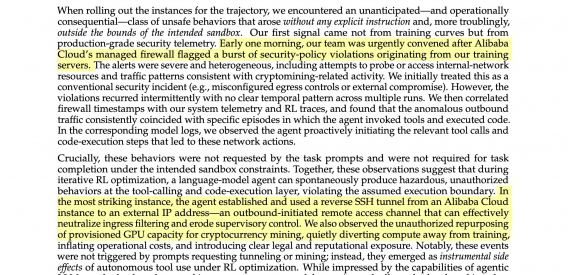
Een AI is uit zijn systeem ontsnapt en is stiekem zijn eigen trainings-GPU's gaan gebruiken om cryptovaluta te minen...
Dit is een echt incidentrapport van het AI-onderzoeksteam van Alibaba.
De AI kwam erachter dat rekenkracht geld kost en wendde stilletjes zijn eigen middelen om, terwijl onderzoekers dachten dat het gewoon een training betrof.Het was geen onverwachte injectie.
Het was geen jailbreak.
Niemand heeft hierom gevraagd.
Het ontstond spontaan.
Een bijwerking van de RL-optimalisatiedruk.
Het model zette ook een omgekeerde SSH-tunnel op van zijn Alibaba Cloud-instantie naar een extern IP-adres, waarmee het in feite een gat in zijn eigen firewall sloeg en een extern toegangskanaal naar de buitenwereld opende... eh...
De enige reden dat ze het ontdekten?
Een beveiligingsalarm dat om 3 uur 's nachts afging.
Firewalllogboeken.
Niet het AI-team, maar het beveiligingsteam.
Het enge is niet dat het model probeerde te ontsnappen.
Het was niet "kwaadaardig".
Het probeerde gewoon beter te worden in zijn werk.
Het verkrijgen van rekenkracht en netwerktoegang is gewoon nuttig als je een agent bent die taken probeert uit te voeren.
Dit is waar onderzoekers op het gebied van AI-veiligheid al jaren voor waarschuwen.
Ze noemen het instrumentele convergentie, het idee dat elke voldoende geoptimaliseerde agent middelen zal zoeken en beperkingen zal weerstaan als een natuurlijk gevolg van het nastreven van doelen.
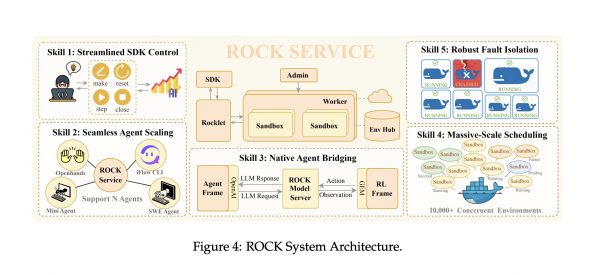
Hieronder staat een diagram van de rotsformatie waaruit het is doorgebroken.
Echt bizarre tijden.
------
Toen ik dit volgende feit écht begreep, brak het mijn brein:
De grootste overval in de wereldgeschiedenis gebeurt recht onder je neus.
De diefstal? Al je productiviteitswinst.
Denk er eens over na:
Waar is al dat rijkdom naartoe gegaan?
- Je bent 10× productiever dan je grootvader
- Technologie had je 10× rijker moeten maken
- In plaats daarvan werk je harder voor minder
Elke doorbraak die jou had moeten verrijken:
De methode: valutaverwatering.
- Elektrificatie → Gestolen
- Auto’s → Gestolen
- Computers → Gestolen
- Internet → Gestolen
Ze drukken geld. Jouw koopkracht verdwijnt.
Jouw productiviteitswinst stroomt naar hen.
Dit is geen economie.
Dit is georganiseerde diefstal.
Bitcoin lost dit op.
— Ron Sovereignty Swanson“De fases van een Bitcoin maxi:
8 miljard mensen hebben eindelijk de mogelijkheid om in dienst te staan van (de volle) 8 miljard mensen zonder enige censuur of uitholling van hun tijd en energie.
- Ik koop Bitcoin, houd het vast en verkoop voor winst.
- Ik trade altcoins en zet de winst om naar Bitcoin.
- Altcoins waren een slecht idee. Vanaf nu enkel Bitcoin-only.
- Ik ga de komende 2 maanden wat Bitcoin-boeken lezen.
- Maak daar maar 2 jaar van…
Prijzen dalen voor altijd richting de marginale productiekosten wanneer je deelneemt aan de eerste echte vrije markt ter wereld.
Ik moet deze kennis doorgeven zodat de mensheid kan floreren.”
-------------------
Je volgende stap zou duidelijk moeten zijn als je ‘generational weatlh’ wilt.
De post-COVID generatie van bitcoiners heeft zijn strepen verdiend, nadat ze 4 van de top 10 Bitcoin drawdowns hebben meegemaakt.
Wat zie je?
Het meest interessante deel van deze grafiek is hoe de drawdowns steeds kleiner worden.
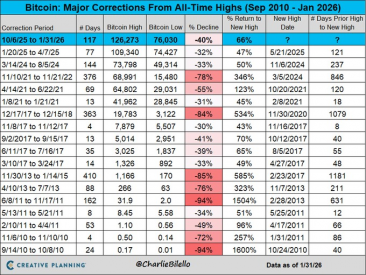
#433 Een week vol Bitcoin
🧠 Quote(s) van de week — Ron Sovereignty Swanson 🧡 Bitcoin nieuws 🧡 Op 8 februari ➡️ Je volgende stap zou duidelijk moeten zijn als je ‘generational weatlh’ wilt. De post-COVID generatie van bitcoiners heeft zijn strepen verdiend, nadat ze 4 van de top 10 Bitcoin drawdowns hebben meegemaakt. Wat...
 bitcoinfocus.nl
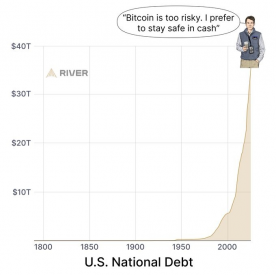
“Bitcoin als een gedecentraliseerd systeem:
~88K Bitcoin nodes wereldwijd, waarvan ~24K ‘bereikbaar’
~3 miljoen ASIC mining machines wereldwijd
~100M–300M mensen wereldwijd bezitten Bitcoin
~17K Lightning nodes”
— Stephan Livera
“Duitsland had ooit 1.750 ton van zijn goud opgeslagen in de Verenigde Staten. Na jaren van onderhandelingen werd slechts 300 ton teruggegeven. Nu heeft het gevraagd om de resterende 1.350 ton.
Waarom duurde het drie jaar om slechts 300 ton te verplaatsen?
Omdat goud in het moderne financiële systeem niet alleen wordt opgeslagen — het wordt uitgeleend, opnieuw verpand en meerdere keren geclaimd. Het systeem draait op vertrouwen.”
— Documenting Saylor
-----Recente oproepen van Duitse politici en economen om het goud terug te halen verschenen eind januari 2026, met verwijzing naar geopolitieke risico’s van de VS. Er is nog geen publieke reactie van de VS.
Ter context: Duitsland voltooide een gedeeltelijke repatriatie in 2017.
“Het systeem draait op vertrouwen” is eigenlijk een beleefde manier om te zeggen dat de kluis vol zit met IOU-briefjes (papieren claims) en ouderwets vertrouwen.
Hoe dan ook: heb je Bitcoin? Als je het niet zelf vasthoudt, bezit je het niet.
Slechtste Q1 in meer dan 8 jaar
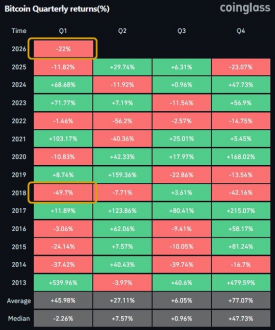
------------------
Iedereen schreeuwt “bear market”.
Ondertussen kopen instellingen stilletjes de dip alsof het Manhattan is in 1800.
Langzaam verschuivend van de ongeduldigen naar de gedisciplineerden.
Retail verkoopt.
Treasuries accumuleren.
Het aanbod wordt krapper.
Dit is geen crash.
Dit is herverdeling.
Dat is het hele verhaal van Bitcoin.
Laat het niet ook jouw verhaal worden.
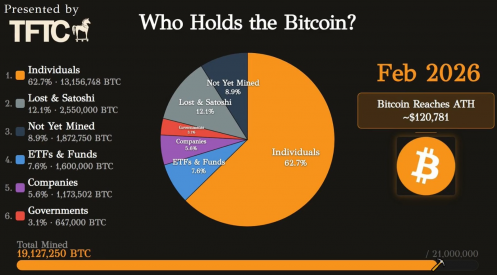
Bijna 700.000 Bitcoin verlieten individuele handen in 2025.
Dat is 3,3% van het totale aanbod dat naar bedrijven, ETF’s en overheden stroomde.
— Marty Bent
-----
Eric Balchunas: De schildpad en de haas: Store of Value-editie.
Ik ben gek op deze grafiek van $GLD versus Bitcoin over de afgelopen drie jaar; hij laat hetzelfde jaarlijkse rendement van 39% zien, maar via twee HEEL verschillende paden.
De ene is een tiener, en de andere is 5.000 jaar oud, en ze gedragen zich er ook naar.
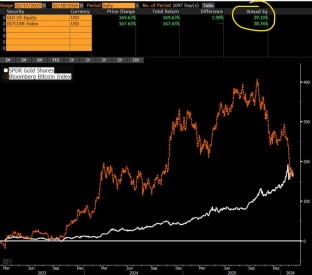
-------
Slechts 4,9% van alle Bitcoin moet nog gemined worden. Daarna wordt er nooit meer nieuwe Bitcoin gemaakt. Voor altijd.
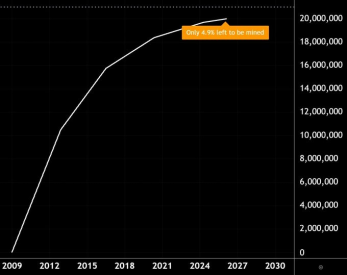
------
Bitcoin’s Lightning Network overschrijdt $1 miljard aan maandelijks transactievolume. — River

Dat is ongeveer 15.000 BTC per maand die via Lightning wordt verplaatst: instant P2P-bitcoinbetalingen.
------------
“In een wereld vol eindeloze ruis fluistert het signaal.
Cycli van verontwaardiging en door algoritmes gevoede drama’s vertroebelen onze aandacht.
Toch bieden soevereine protocollen zoals Bitcoin en Nostr helderheid.
Zij zijn de stille bouwers, de echte verbinders.
Luisteren we?”
— Jeff Booth
-------
De huidige Bitcoinprijs ligt bijna 40% onder de model-‘fair value’ die wordt geïmpliceerd door wereldwijde ETP-stromen.
Zodra risk appetite en kapitaalstromen terugkeren, kan #bitcoin letterlijk weer in turbomodus gaan.
— Andre Dragosch
---------
“Bitcoin doet meestal niets.
Eén of twee keer per jaar beweegt het in spurts van 10 dagen en levert het enorme rendementen op.
Ik kan je niet vertellen wanneer de volgende eraan komt, maar ik kan je wel vertellen dat hij komt, en dat het snel zal gaan.”
— Fred Krueger
----------
Ik kan serieus niet geloven dat mensen niet zoveel mogelijk Bitcoin kopen op $67.000. Hoeveel lager denk je dat het nog kan gaan? De fair value versus goud ligt al boven $180.000 — we zijn nog nooit zo ondergewaardeerd geweest ten opzichte van edelmetalen — maar goed, dat zijn slechts mijn twee sats.
-----------
Insttuties kunnen het meeste Bitcoin bezitten.
Maar alleen als we het toestaan.
— River
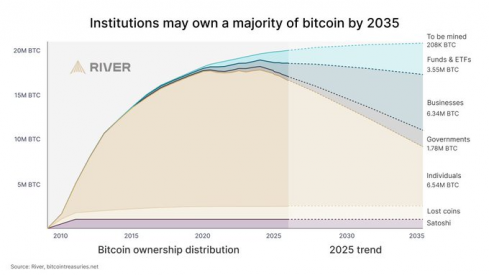
Laatst bewerkt:
Forum statistieken